Our story, since 1928
Secular Jewish Experiential Education for Social Justice.
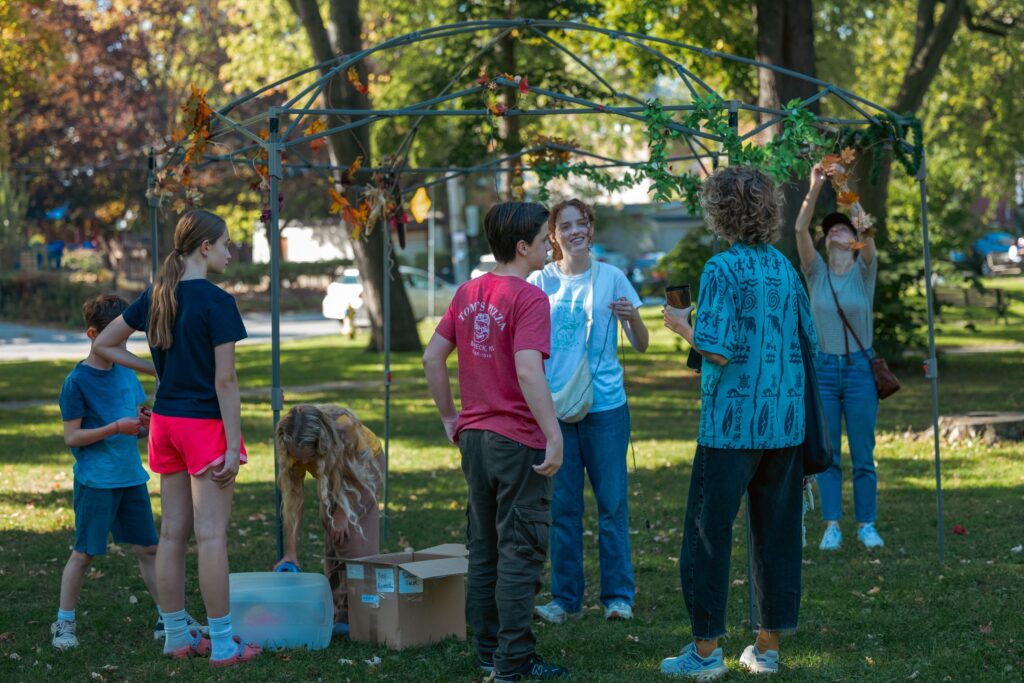
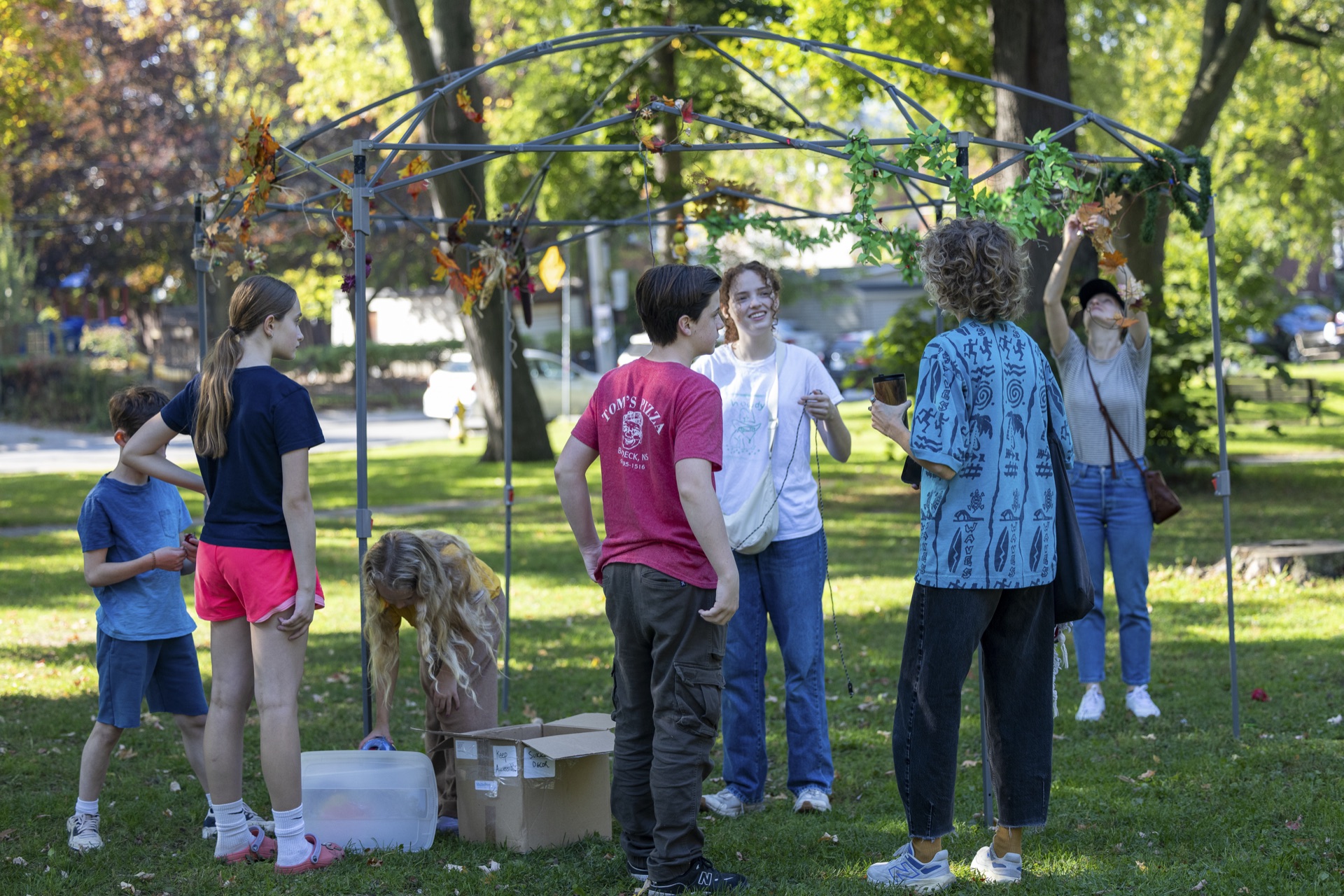
The Morris Winchevsky Sunday School is Toronto's secular Jewish shule, focused on social justice. Offering a range of programs for pre-school all the way to B'Mitzvah groups, our shule focuses on experiential education, immersing our students in an environment where they get to learn, play, and experiment with secular Jewishness and social justice practices.
Our programs
From preschool to B'Mitzvah.
Kinder Kapers
An interactive, biweekly preschool program for children aged 2.5 – 5
Grade 1-3
An experiential program that lays the foundation for understanding Jewish civilizations' rich histories and practices
Grades 4-6
An experiential program that lays the foundation for understanding Jewish civilizations' rich histories and practices.
B'Mitzvah*
A one year program for students preparing for their secular B'Mitzvah* ceremonies with a curriculum that focuses on Jewish philosophy, literature, and history, while integrating social justice issues and practices.
Since 1928
Morris Winchevsky School History
The Morris Winchevsky School was founded in 1928 by members of the United Jewish People’s Order (UJPO).
It was named after the Lithuanian poet Morris Winchevsky whose visionary poetry, imagining futures of freedom and justice, was recited at many of the labour movement's marches and meetings.
Winchevsky was very active in workers' movements in Eastern Europe, England, and the United States and the school's many generations of graduates continue in his footsteps, working for social justice across many movements. The Winchevsky School was originally located in the Christie and Bloor area. It then moved to the site of the Morris Winchevsky Centre in the Bathurst and Lawrence Area but in 2011 it returned downtown to its current location – the 918 Bathurst Centre.
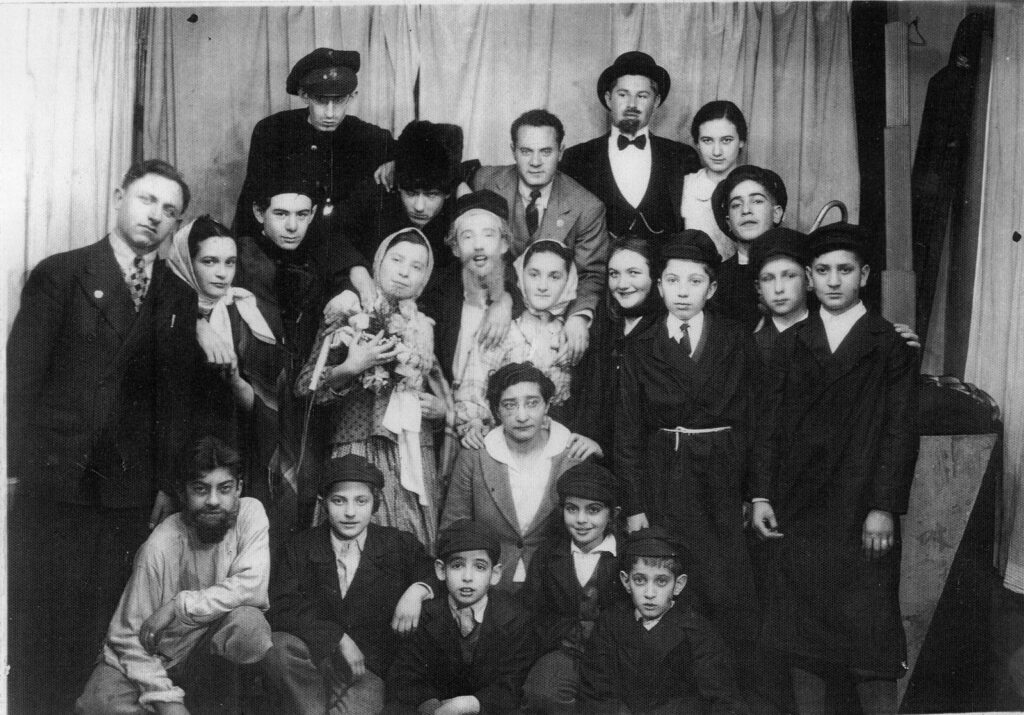
Across the decades, shule children marched against fascism and demanded hot lunches in the public schools; learned from textbooks like the 1934 Mir Lernen un Kemfn ("We Learn and Struggle"); and met figures like Paul Robeson, who dropped in on Toronto's shule children in 1956. In Montreal, the renowned Yiddish poet Sholom Shtern led the school and accompanied his students at the piano. Today, that same spirit continues on Sunday mornings at 918 Bathurst Street.
From the archive
A century of Sunday mornings.
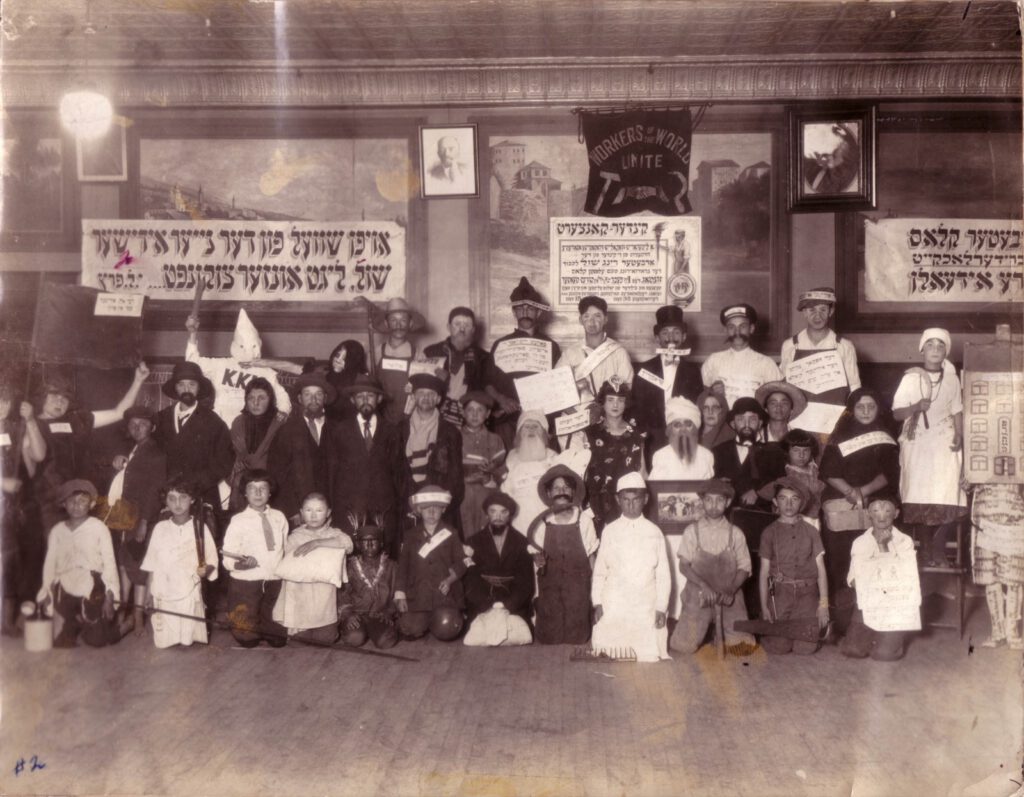
1920sChildren of Winnipeg’s Liberty Temple shule stage a pageant in the 1920s. The Yiddish sign at left reads, “Our future lies in the emergence of the new Yiddish school”
1934Mir Lernen un Kemfn (“We Learn and Struggle”), a 1934 children’s textbook used in the shules. Among other things, the book discussed potential careers, how to protest and strike, and how to draw your own hammer and sickle
1956American movie star and singer Paul Robeson, a long-time friend of UJPO, dropped in to meet MWS children at UJPO’s home, 83 Christie Street, in 1956 on his way to sing for a union convention in Sudbury
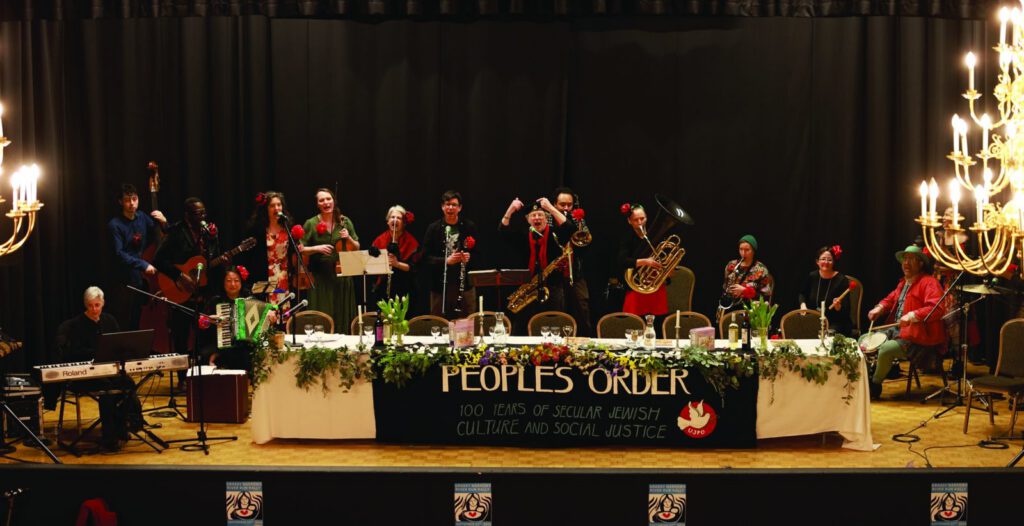
2026Marching Disorder, formed by Shule parents, regularly perform at UJPO holiday celebrations and political rallies. Here, performing at the 2026 Third SeyderContinue exploring
All organizations →Keep the mame-loshn alive
A living resource in Yiddish, then learn it in our classes.
Learn Yiddish →Keep the mame-loshn aliveEverything parents need
Class times, the Sunday schedule, registration, tuition and bursaries.
Families & Classes →Everything parents needA hundred years of Sunday mornings
The shule, generation by generation.
The school's story →A hundred years of Sunday morningsCome see a Sunday morning.
The best way to know the shule is to visit. Families are always welcome.